


Howdy, EduLize Readers 🌻.
There is a lot of talk around Post Secondary Education when you enter high school. Suddenly, they face big questions like what program they would like to join or how they will pursue further education.
While the shoddy kids are quite uncertain about what post secondary education is. If you’re amongst those young students who are puzzling over the same, then worry no more.
I’ve compiled a comprehensive guide on post secondary education for you to know the ultimate meaning. So, keep reading if you’re interested in learning more about this!
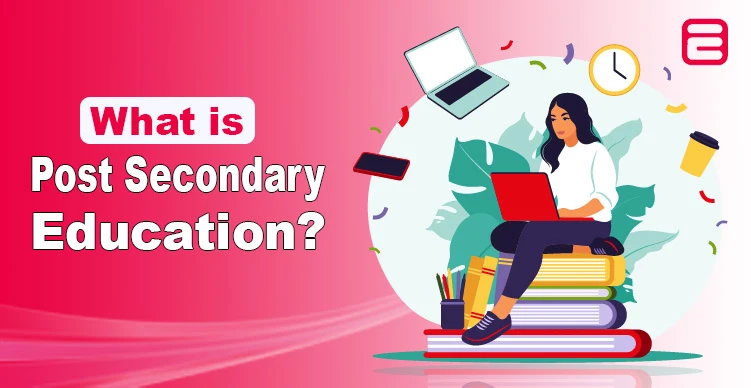
What is Post Secondary Education?
Post secondary education is any form of education that you receive after completing high school or the GED qualification in the US.
This is also referred to as tertiary education, and includes college and university, as well as vocational schools. You can develop specialized skills during formal tertiary education while doing hands-on training, and get accredited degrees and certificates.
62% of high school graduates go on to tertiary education, alongside the enrollment of new graduates has declined to 11.6%, which was at its peak with 70.1% back in 2009.
Post Secondary Education Examples
Here you will find the range of options for higher education that students can commonly choose from.
It’s heartening to see a huge number of high school students applying for college programs. The majority of students passing out of secondary education schools are likely to join college for post secondary education.
In addition, the convenience of college education offers the option between a 2-year Associate Degree program and a 4-year bachelor’s Program. The associate degree is a good option for those who:
- Those students are looking to begin a career without any further delay.
- With the associate degree, the student might be able to achieve the desired goals.
- The cost of education is easier on the pocket with this degree program.
- Once completed, you can transfer to a bachelor’s Program if you want to.
For post secondary education, universities offer undergraduate, graduate, and postgraduate programs. A four-year bachelor’s degree consists of core courses and an array of optional courses to choose from.
These degree programs prepare students in specialized areas to prepare them for their professional careers. Moreover, they will be able to join hands-on practice in university labs to develop practical skills for a brighter career.
Vocational school, technical schools, and trade schools all these options offer associate degrees or certifications for skills-based training. Some examples are of auto mechanics, hospitality, plumbing, nursing, and carpentry.
After any of these post secondary education programs, there could be an internship required to formally join the workforce.
Eligibility Requirements for Post Secondary Education
Anyone who chooses post secondary education needs to pass high school, the GED exam, or a similar secondary school program. US citizens or US visa holders, 18 years old or above, are eligible to apply for post secondary education programs.
I would recommend students to enquire about requirements specific to their state before applying for post secondary education programs. Furthermore, whether public or private, some institutions could have other requirements as well, like a certain CGPA.
Difference Between K-12 and Post Secondary Education
In case you’re wondering how Kindergarten-12 is different from post secondary education, I’ve simplified their differences for you.
While K-12 education provides a relaxed environment, academic programs in higher education have privileges of their own. Some differences between the two are:
- K-12 education is more structured, and students are bound by routine. On the other hand, with post secondary education, students need to create their own routines and study plans.
- Students in K-12 study different subjects to be able to discern their area of interest. With higher education, students develop proficiency and expertise only in their area of interest.
- Classroom sizes are small in K-12 education, but post secondary education classroom sizes could be anywhere between 50-100 students.
- Teachers in K-12 education maintain close contact with students. But, after high school, during post secondary education, students have less access to teachers.
- Students in the K-12 system of education are supported and guided by their teachers and parents. Higher education students are independent and learn to manage their matters on their own.
| K-12 Education | Post Secondary Education |
|---|---|
| School creates structure and routine | Students are responsible for creating their own structure and routine |
| Must study all subjects in the curriculum | Study only those courses that are related to their specialisation |
| Less number of students in a classroom | Can have between 50-100 students in a classroom |
| Teachers and parents supervise and guide in the academic process | Students have to make decisions independently |
| Teachers are easily available to students to address their concerns | Teachers are not easily accessible, and students find ways to meet them |
Before You Go
Post secondary education definition showcases that it’s a formal learning that is especially designed for students who want to pursue a career quickly. They are seen practically implementing their learning because of their hands-on experiences during higher education.
The variety of options available, from college and university to vocational schools, makes it easier for students to choose the most relevant form of post-secondary education.
People Also Ask
Post-secondary education is any formal training or learning program that students usually attend after secondary education.
No, post-secondary education isn’t high school, as it’s referred to as tertiary education.
Yes, college is considered tertiary education for students who want to develop skills after passing high school to start a career.
Obviously, graduate school is considered tertiary education for students who want to learn new skills for a brighter career.
Your choice of the form of post secondary education will determine the expense that you will incur. State colleges, vocational and trade schools cost a lot less and are more affordable as compared to private universities.